Air Styling Tools: Do They Actually Cause Less Damage?
A research-based breakdown of how air styling technology actually works and whether the damage-reduction claims hold up. Covers the three main types of air styling tools, the science behind why consolidating heat steps reduces cumulative hair damage, and how wet-to-dry air straightening works.
12/10/202512 min read
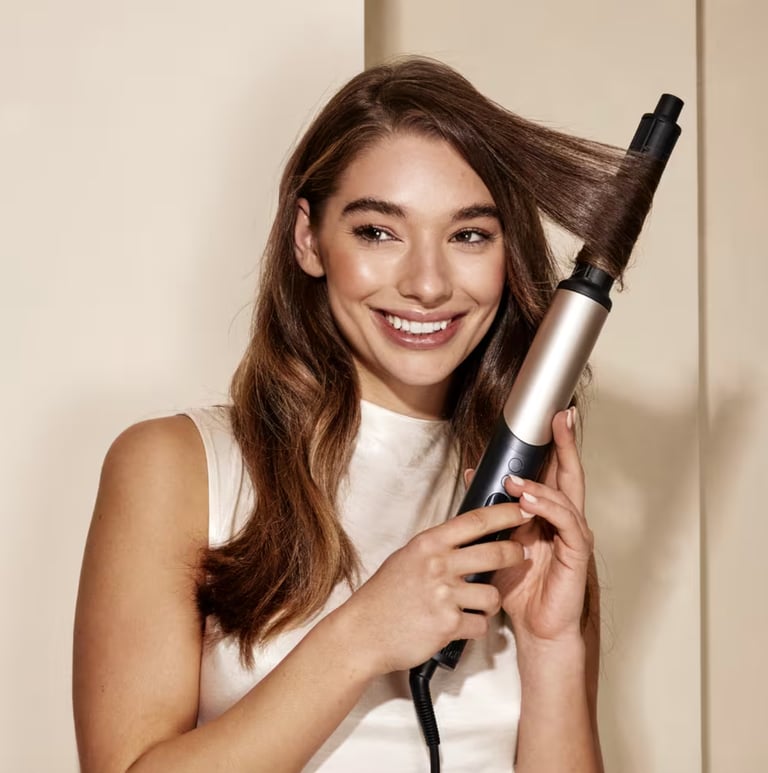
Walk into any beauty retailer right now and the air styling section has expanded considerably. Air wraps, air stylers, air straighteners — the category has grown from a niche premium product into a mainstream fixture. The marketing around these tools is consistent: less damage, healthier hair, no compromise on results.
These are significant claims. And given that heat damage is one of the most common and most preventable hair problems, they are worth examining honestly. Do air styling tools deliver on the damage-reduction promise? And if so, how — and for whom?
After spending time testing tools in this category and looking closely at the underlying mechanics, the answer is: yes, with important caveats. The technology is genuinely different from conventional styling tools in ways that matter. But not all air styling tools are equal, and the benefits are more relevant for some hair types and routines than others.
First: what is air styling, exactly?
The term covers several distinct technologies that share the use of controlled airflow as a core styling mechanism. It is worth separating them, because they work differently and offer different benefits.
The first category is the air styler or hot air brush. This is a tool that combines a heated barrel with airflow to dry and shape the hair simultaneously. Think of it as a blow-dryer and round brush fused into one device. The airflow dries the hair while the heat shapes it, allowing a blowout-style result in a single step and eliminating the need for a separate dryer.
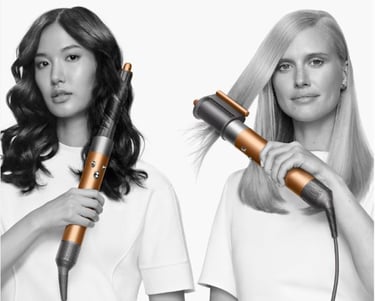
The second category, popularised by Dyson's Airwrap, uses the Coanda effect: a principle of
fluid dynamics in which a high-speed airflow causes nearby objects to wrap around the barrel
without direct contact. The hair is styled by air rather than by heat touching the strand directly.
The third category is the air straightener. This is a flat iron with integrated airflow channels that
passes hair through a controlled stream of air and heat at the same time. This is the category
most relevant for wet-to-dry styling, which conventional flat irons should never attempt.
The core damage argument, and where it actually holds up
The most substantive case for air styling tools comes down to one concept: reducing total heat exposure per styling session.
Consider a common routine: wash hair, blow-dry with a standard dryer until fully dry, then flat iron. That is two complete rounds of heat exposure, often at different temperatures, applied sequentially to the same strands. The blow-dry phase alone typically takes 10 to 20 minutes of direct heat. Adding a flat iron pass on top of already-dried hair means the strand has absorbed heat twice in the same session.
An air styler or air straightener that achieves a comparable result in a single step applies less total heat to the hair even if the temperature of that single step is similar to the flat iron it replaces. This is not a marginal difference. Cumulative heat exposure is the primary driver of long-term structural damage to the hair cortex and cuticle. Removing an entire heat step from the routine meaningfully reduces that cumulative load over weeks and months.
The most compelling case for air styling is not that any single pass is safer. It is that a well-designed air tool can replace two heat steps with one, cutting total exposure across the whole routine.
The Coanda effect: does contact-free styling make a real difference?
For tools that use the Coanda effect, there is an additional mechanism worth understanding. Conventional curling irons and wands grip the hair against a heated surface. The mechanical contact between a hot barrel and the strand creates both thermal and frictional stress. The cuticle is exposed to direct high heat and to the friction of wrapping and unwrapping.
Coanda-based tools attract rather than grip the hair. The strand wraps around the barrel through airflow without ever making sustained contact with a hot surface. For fine, already-damaged, or high-porosity hair, where the cuticle is fragile and the strand cannot withstand much physical stress, this distinction is genuinely significant. Less mechanical contact means less cuticle disruption, which translates to less frizz, less breakage, and better retention of moisture.
It is worth being honest about the limits here: Coanda tools require more time to style thick or very long hair, and they work less predictably on very coarse or resistant textures. The benefit is most pronounced for fine to medium hair that is relatively fragile.
Air straightening on damp hair: the most underappreciated benefit
Of all the claims made about air styling technology, the wet-to-dry capability of air straighteners is the one with the clearest mechanical justification, and also the one most people do not fully understand.
The reason conventional flat irons should never be used on damp hair is straightforward. When a high-temperature plate contacts a wet strand, the residual moisture inside the hair shaft converts to steam almost instantaneously. This steam has nowhere to go. It expands inside the cortex, causing a condition sometimes called bubble hair: microscopic bubbles that form within the strand, weakening the cortex and creating fracture points. The visible result is excessive frizz, a rough texture, and accelerated breakage.
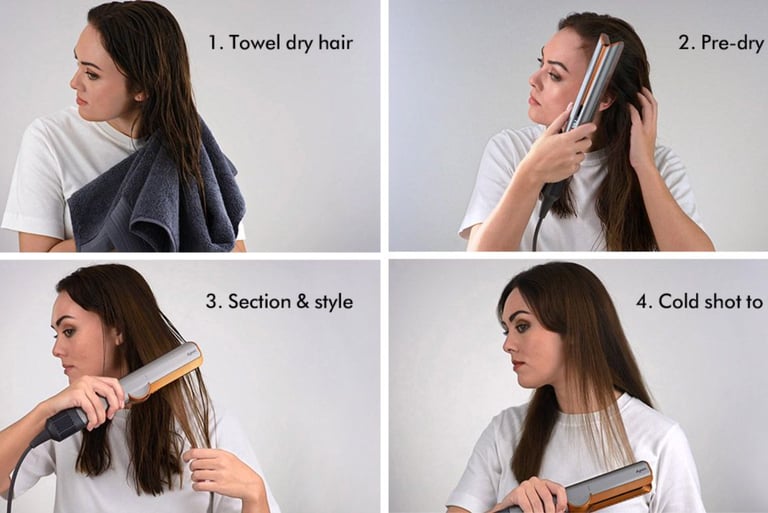
Air straighteners designed for wet-to-dry use work differently. Rather than applying maximum plate heat to a wet strand, they use a combination of airflow and graduated heat to progressively dry the hair as it moves through the tool. The moisture is removed by the airflow before high heat reaches the cortex, eliminating the steam-shock mechanism. The hair arrives at styling temperature already significantly drier than when it entered.
Wet-to-dry styling done right produces smooth results without
the steam-shock damage of using a conventional flat iron on
damp hair.
This matters practically because many people already style their hair before it is fully dry, whether by preference, time pressure, or because fully drying before styling adds a significant extra step. For these users, the choice is not between air straightening and patience. It is between air straightening and applying a conventional flat iron to damp hair. In that comparison, a well-designed air straightener is meaningfully safer.
What to look for when evaluating an air styling tool
Not all tools marketed as air stylers or air straighteners deliver on the damage-reduction premise. The airflow in some tools is cosmetic: a cool-shot function or a light fan rather than a genuine integrated drying and styling mechanism. Here are the design characteristics that distinguish tools where the technology is doing real work:
Genuine simultaneous drying and styling: the tool should be capable of starting on damp or towel-dried hair and producing a finished result, not just a heat-and-air experience that still requires pre-dried hair
Adjustable, accurate temperature settings: the ability to dial to a specific temperature, not just high, medium, and low, is a consistent indicator of a more carefully engineered tool. Lower temperatures between 150 and 185 degrees Celsius are sufficient for most people and produce less structural damage
Even heat distribution: ceramic plates or barrels distribute heat more evenly than aluminium, reducing the need for repeated passes over the same section
Integrated rather than supplementary airflow: the airflow should be part of the styling mechanism, not a separate attachment or afterthought
We Tested 4 Air Straighteners So You Don't Have To
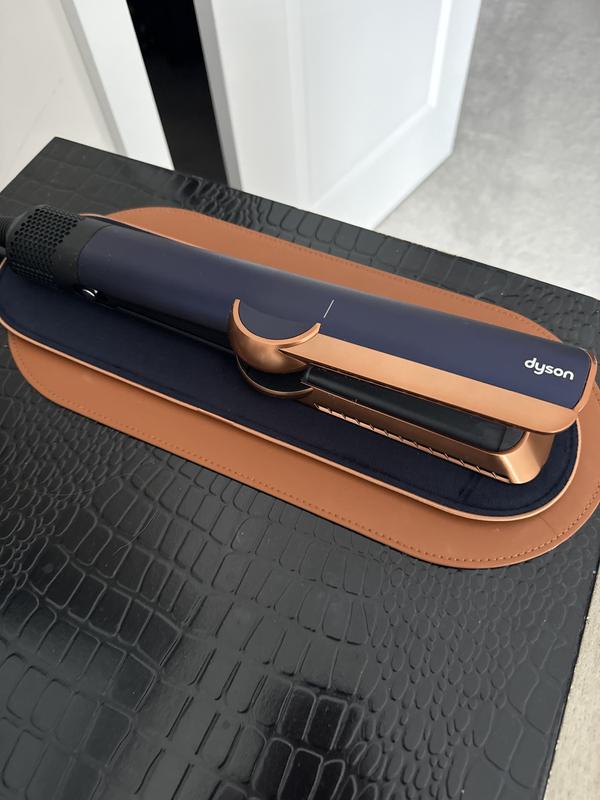
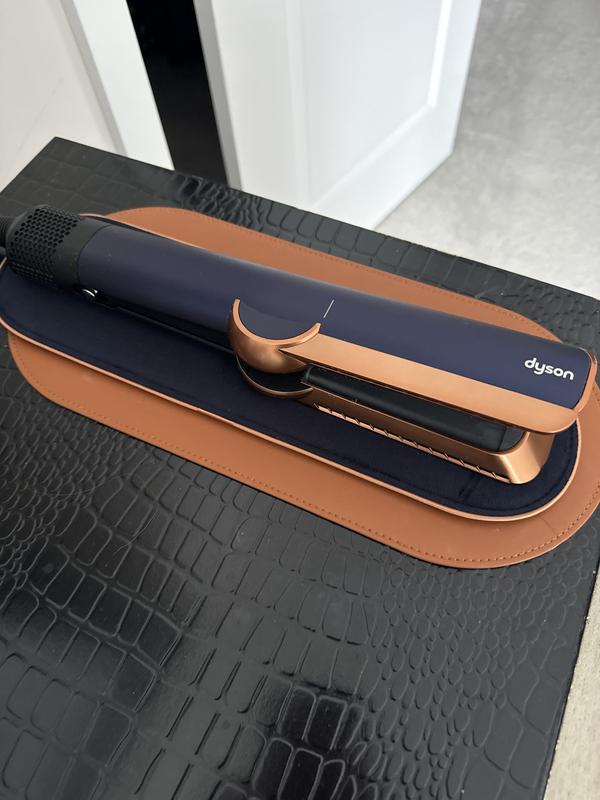
First up: Dyson Airstrait
Right, so this is the one everyone has seen on their feed. The Airstrait
is genuinely impressive and the tech behind it is real: a 13-blade
motor spinning at 106,000 RPM propels air through two narrow
apertures at a 45-degree angle, creating enough airflow pressure
to straighten and dry simultaneously without any hot plates making
contact with the hair.
No plates touching the hair means no plate-to-cuticle friction, and the temperature is regulated up to 30 times per second by internal sensors. On fine to medium hair it is fast. One reviewer with fine, medium-length hair got from wet to styled in about 7 minutes. On thicker hair it takes longer and you genuinely need to go slowly, one small section at a time.
What we liked:
The results are legitimately silky. Hair comes out feeling soft rather than crispy, which is a real difference from a conventional flat iron.
The LCD screen is clear and easy to read.
The auto-pause when you set it down is a small thing that saves a lot of minor stress.
The build quality is as solid as you'd expect from Dyson.
What we didn't:
The price. Five hundred dollars is a significant ask
The power plug is bulky enough that it won't fit flush against a wall if furniture is in the way.
It is also on the heavier side, which becomes noticeable on longer sessions with thick hair. And if your hair is very short, the arms don't get close enough to the roots to dry them properly.
Verdict: The benchmark of the category. If budget is not the primary concern and your routine currently involves a full blowout before straightening, the time and heat exposure savings are real. For everyone else, there are tools that get closer to this result for less.
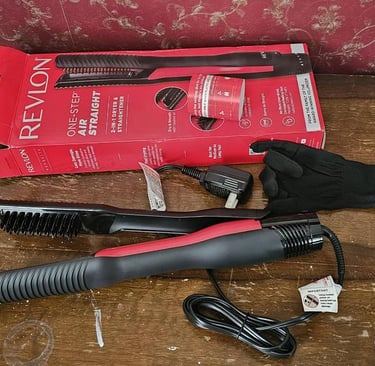
Second up: Revlon One-Step Air Straight
Revlon built its reputation on the original One-Step Volumizer, which became a cult product for good reason. The Air Straight is the straightening version of that idea: air vents on one side, a 1.4-inch ceramic tourmaline plate with teeth on the other, and a squeeze-activated airflow system called AirPause that starts the airflow when you press the handles together and stops it when you let go.
It has six settings total: four for damp hair
(Cool Air, Low Air, Medium Air, High Air)
and two dry-hair settings where the plate heats up to 200°C
and works more like a conventional straightener.
The idea is that you do the damp work with air and finish with
the plate if needed.
In practice, it works well on straight to wavy hair that isn't extremely thick.
It handles decent-sized sections, the ceramic plate produces a smooth result,
and the AirPause feature is genuinely useful for sectioning without
having to keep switching the tool on and off. It needs about 80% air-drying first though, it is not quite a straight-from-soaking-wet tool.
What we liked:
The price makes it one of the most accessible air straighteners available.
It does actually work for its intended purpose.
The AirPause handle design is clever and practical. Lightweight and easy to hold for a full styling session.
What we didn't:
Thicker or curlier hair will likely need multiple passes and may find it doesn't deliver a truly flat, polished finish without also using the heated plate setting.
The large size can be slightly awkward at the roots. It is not a replacement for a flat iron if a very sleek, disciplined result is the goal.
Verdict: A solid and affordable starting point for anyone curious about air straightening who isn't ready to spend premium pricing. Manages expectations well if you understand it is better suited to fine and medium textures.
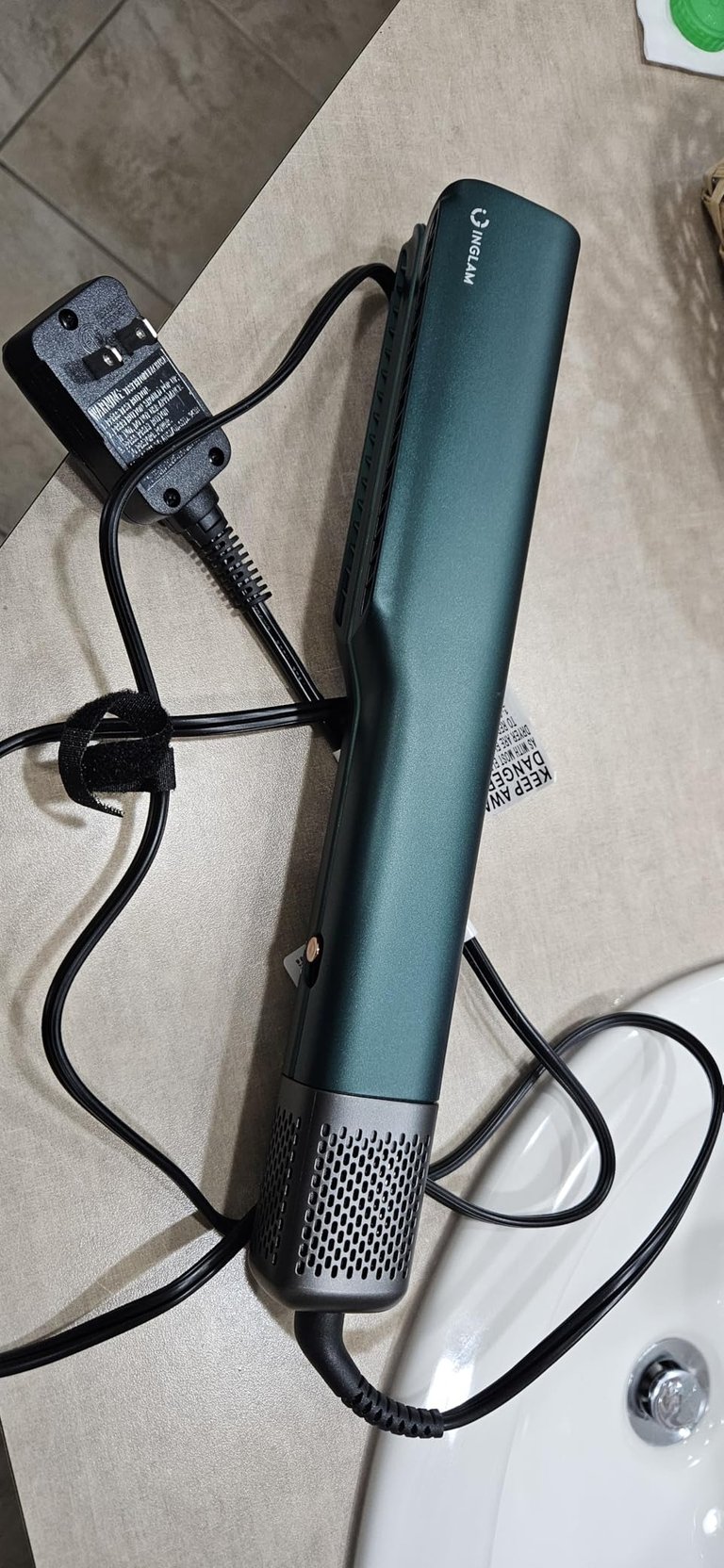
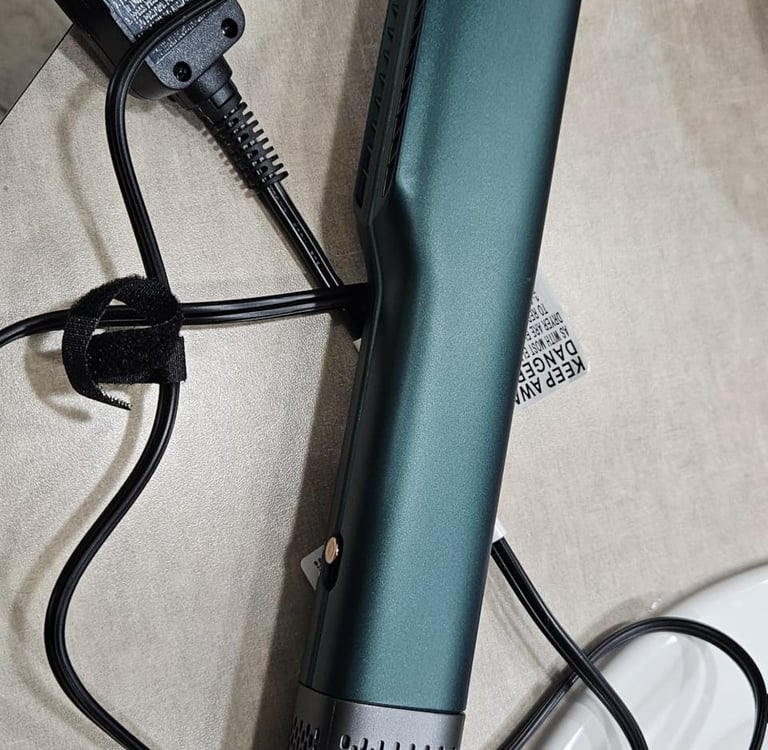
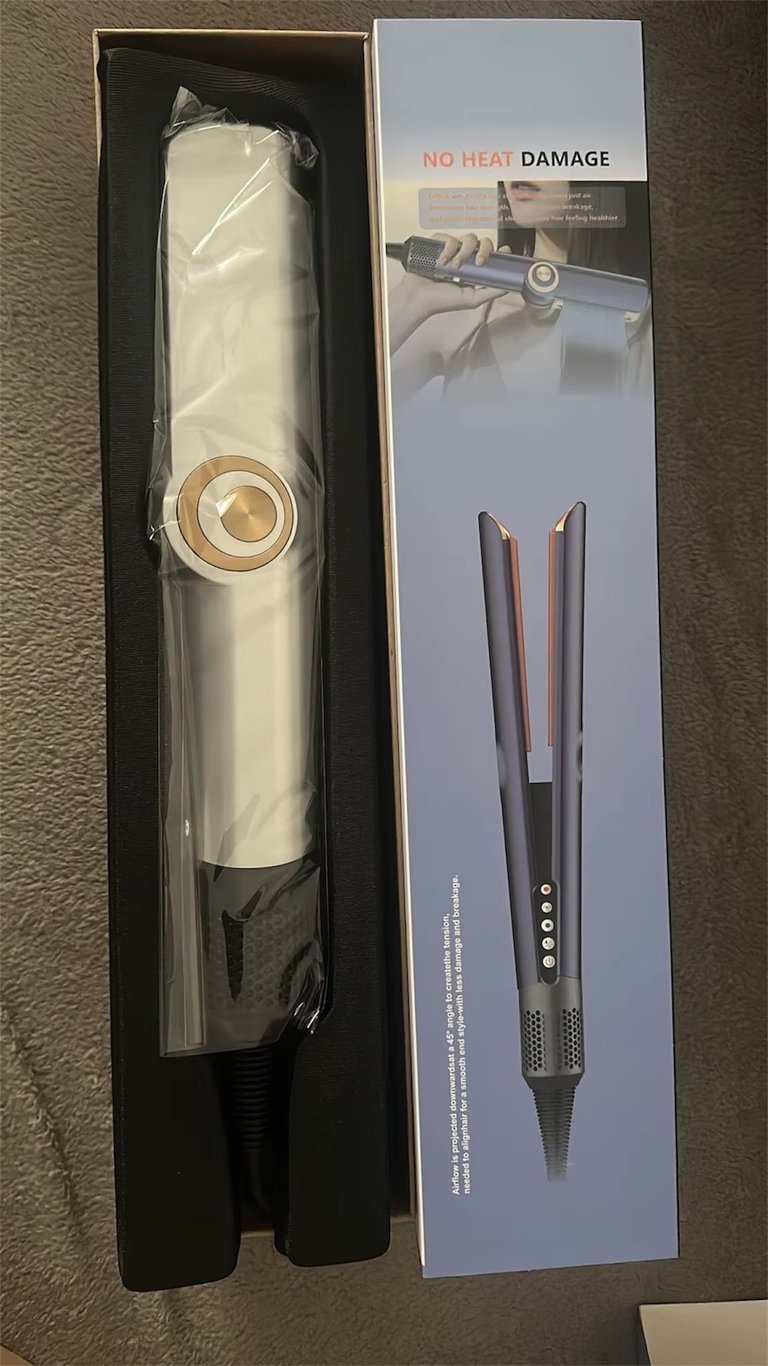
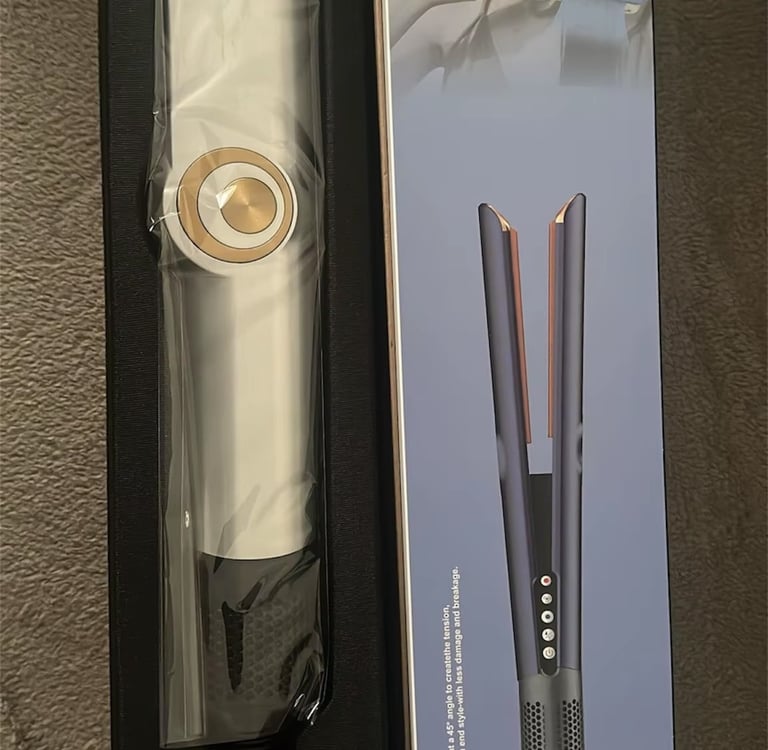
Third up: IG INGLAM Air Straight
The IG INGLAM has a distinctive look: it's modelled on the shape
of a harmonica, with a linear vented outlet that channels directional
airflow straight down through the hair. No plates, no direct heat contact.
A 110,000 RPM brushless motor generates the airflow, and the tool emits
200 million negative ions during use, which is a real mechanism for
reducing frizz and static, not just marketing language.
It has four heat settings (Cool, Low, Mid, Hot) and three fan speeds,
and the NTC intelligent heat control measures airflow temperature
100 times per second to prevent extreme heat spikes.
There's also a useful lock button that closes the arms for
storage and concentrates the airflow when you want more precision.
Real user reviews compare it directly to the Dyson Airstrait
and the verdict that comes up most often is: similar results,
significantly lower price. One user with coarse, dark, wavy hair
noted it works particularly well on baby hairs and hairline pieces.
The most consistent criticism is the 3-second press-and-hold required
to power it on, which is confusing the first few times, and a small
number of users have reported units that did not power on at all.
What we liked:
The directional airflow design genuinely works.
The motor is powerful for the price point. The negative ion output
is meaningful for frizz reduction. Multiple speed and heat combinations
give real flexibility. The 6-foot 360-degree rotating cable is a practical
detail that adds up over a full styling session.
What we didn't:
The power-on mechanism trips people up.
Quality control has had some inconsistency based on user reports.
Works better on hair from mid-length down, as root drying requires
pre-drying the roots separately first.
Verdict: A genuinely strong mid-range option that punches above its price point on performance. Best for medium to long hair on the fine to medium side of the thickness spectrum.
Fourth up: Vynuvelle Wet-to-Dry 2-in-1 Air Straightener
The tool has dedicated wet and dry modes, a cool air mode for setting the style, and built-in
moisture sensing that adjusts the heat delivery based on whether the hair entering the tool
is still damp. Vented bristles release air through the hair rather than just across the surface,
and the anti-burn temperature control prevents the kind of steam shock that happens
when conventional flat irons hit wet strands.
In testing, the damp-to-styled result was smooth and noticeably less frizzy than
what a conventional straightener would produce on the same starting condition.
The LED display made adjusting settings mid-session genuinely easy rather than
a guessing game. The tool is not quite as fast as the Dyson on very fine hair,
but it covers a wider range of starting conditions more confidently.
What we liked:
The LED screen is a standout feature that no other tool in this test has.
The dedicated wet mode with moisture-sensing technology is well-thought-out.
Smooth results from towel-dried hair without needing to pre-blowout.
The price point sits in a reasonable spot for the feature set it delivers.
The free styling kit included in orders is a nice practical bonus.
What we didn't:
Like most tools in this category, it takes some practice to get the technique right on the first few uses. Results on very thick or resistant hair require patience and slower passes. Not yet as widely available as the established names in this category.
Verdict: A capable wet-to-dry tool with a feature set that stands out at its price. The LED display alone makes it more user-friendly than most competitors, and the moisture-sensing wet mode does the job it claims to do. Worth serious consideration for anyone who wants air straightening without the hefty price tag.
The overall takeaway
All four tools do what they say, which is more than can be said for plenty of products in this space. The differences come down to price, hair type, and what specifically you want from the routine. The Dyson is the most refined and produces the most consistent results across hair types. The Revlon is the easiest entry point. The INGLAM is the best value for medium to long hair. The Vynuvelle sits in between with the most transparent interface of the group and a genuine wet-mode design that makes the damp-start use case feel most intentional.
No brands mentioned in this article has any commercial relationship with YourBetterHair. Tools are referenced based on testing performance only.
Who benefits most from making the switch
Air styling tools deliver the clearest benefit for three groups in particular.
The first is anyone whose current routine involves a full blow-dry followed by straightening or curling. Consolidating those two steps into one is the most direct way to reduce total heat exposure, and the practical difference in hair condition over several months is noticeable.
The second is anyone who regularly styles before their hair is fully dry. If that is already part of the routine, an air straightener designed for wet-to-dry use is a straightforward upgrade over a conventional flat iron for the same task.
The third is people with fine, colour-treated, or already-damaged hair, where the margin for additional damage is small and the cuticle is least equipped to handle repeated heat stress. For this group, reducing contact heat and total heat passes per session has an outsized effect on how the hair holds up over time.
[ IMAGE: Hair texture closeup ] Close-up of healthy, smooth hair strands showing shine and a flat, intact cuticle surface. No frizz. Natural light. This is the visual payoff of the article's central argument.
Reduced heat exposure over time produces a visible improvement in cuticle condition, shine, and overall hair texture.
The honest limits
A few things air styling tools do not change: the need for heat protectant, which is still recommended regardless of tool type; the benefit of recovery days with no heat styling; and the importance of temperature control. An air styler used at maximum temperature daily is not a low-damage routine. It is a different tool applied with the same habits that caused the original problem.
The technology is also more capable on some textures than others. Very thick, coarse, or highly resistant hair may require more time with an air tool to achieve the same result as a high-powered conventional alternative. The trade-off in heat exposure is still often worthwhile, but the time investment is real.
Air styling represents a genuine step forward in how heat is applied to hair. The science behind the key claims, reduced total heat exposure, wet-to-dry safety, and contact-minimising styling, is solid and specific. For a category where marketing frequently runs ahead of evidence, that is worth noting.
About this article
This article was produced independently by the YourBetterHair editorial team. No brands featured in this piece have a commercial relationship with YourBetterHair. Products are referenced based on direct testing and relevance to the topic. For more on how YourBetterHair evaluates tools and products, see our editorial standards page.