Heatless Styling That Actually Works: A Realistic Guide to Gorgeous Hair
Heatless styling is back (and better than ever) offering a damage-free way to achieve waves, curls, volume, and sleekness with less effort
3/16/20263 min read


Heatless styling has had something of a revival in recent years — partly driven by social media tutorials, partly by growing awareness of long-term heat damage. The appeal is obvious: achieving waves, curls, or smooth styles without touching a hot tool. But a lot of the content around heatless styling skips over the practical realities — the techniques that genuinely work, the ones that require very specific hair types to succeed, and the situations where heat-based styling is simply the more pragmatic choice.
This is a realistic guide to heatless options, what each technique suits, and how to get reliable results.
The case for going heatless — and its limits
The clearest benefit of heatless styling is cumulative. Hair that is heat-styled daily or near-daily accumulates structural damage over time regardless of how carefully it is done. Incorporating heatless days — even a few per week — meaningfully reduces total heat exposure. Heatless techniques also tend to produce results that move and feel more natural, since the hair's hydrogen bonds are manipulated through tension and time rather than rapid thermal force.
The limitations are equally real. Heatless methods generally take longer — most require hair to dry fully while set, which can mean overnight preparation. Results tend to vary more with weather and humidity. And on very coarse or tightly coiled hair, some techniques simply cannot produce the same results as thermal styling without hours of effort.
Heatless waves and curls
The most reliably effective heatless method for waves is braiding or twisting damp hair and leaving it to dry fully before releasing. Larger sections produce looser waves; smaller sections produce tighter ones. The key variable is dryness — releasing any section while the hair is even slightly damp will cause the result to drop quickly and frizz as it finishes drying.
Flexi rods and foam rollers work on a similar principle and give more consistent curl shape. They work best on hair that is somewhere between damp and dry — not soaking, not nearly dry. A light setting product (curl cream or mousse) applied to each section before rolling improves hold and reduces frizz significantly.
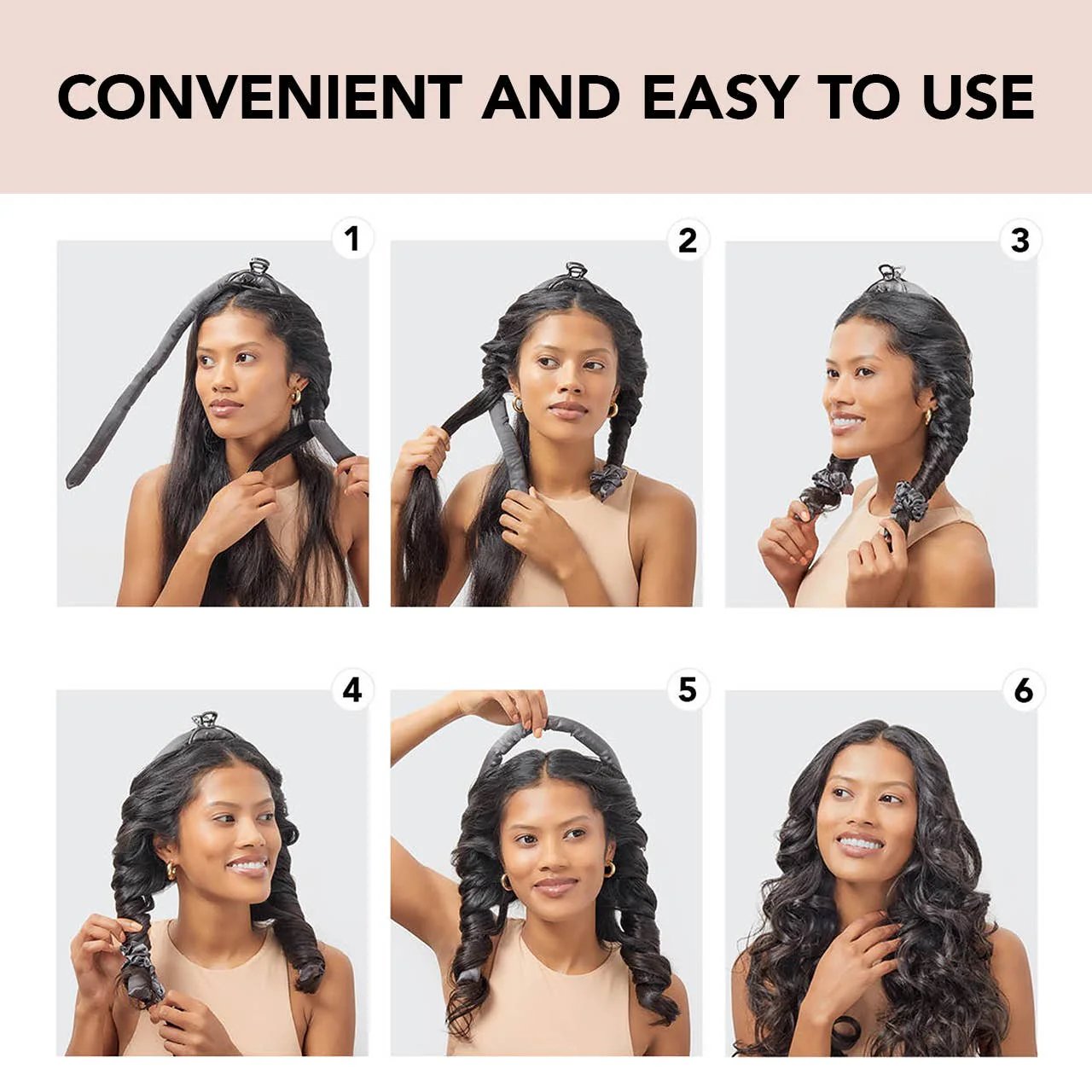
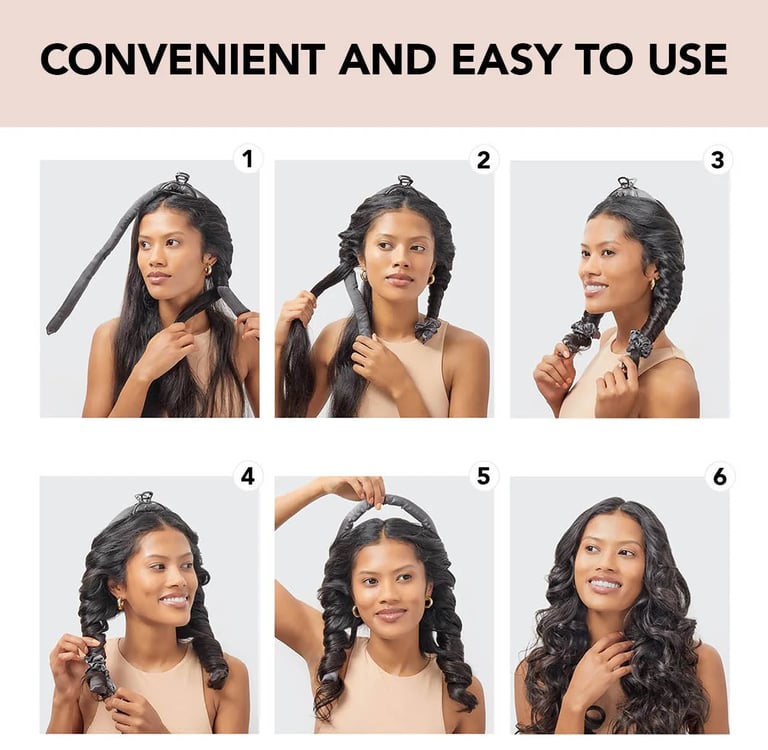
The heatless curl ribbon or robe-tie technique that circulated widely online produces results that vary considerably by hair type. On fine, straight hair with some natural wave tendency, it can produce soft, blowout-style waves. On thick, straight hair it often produces uneven results. The technique is worth trying, but expectations should be calibrated accordingly.
Heatless smoothing and stretching
For those aiming for a smooth, elongated result without heat, banding and tension wrapping are the most practical options. Banding — securing hair into a loose, low ponytail and wrapping additional hair ties at intervals down the length. Gently stretches hair as it dries, reducing shrinkage without heat. This is particularly effective on natural, coily, or afro-textured hair where stretch is the primary goal.
Wrapping — smoothing hair around the circumference of the head and pinning it flat — is a classic heatless technique for achieving sleek, smooth results on straight or relaxed hair. Done on slightly damp, product-applied hair and left overnight under a silk scarf, it can produce a result comparable to a low-heat blow-dry.
Making heatless methods more reliable
The single most consistent predictor of heatless styling success is hair condition. Well-moisturised, healthy hair responds to tension and time far better than dehydrated or damaged hair, which tends to frizz and resist taking a set. A consistent moisturising routine — regular deep conditioning and adequate daily hydration — is the foundation that makes heatless techniques work.
Product choice also matters. A lightweight mousse or curl cream gives hold without stiffness. A small amount of oil applied after setting reduces frizz without weighing the style down. And a satin pillowcase or bonnet overnight reduces friction and preserves the set regardless of which technique is used.
Heatless styling works best when treated as a regular part of a routine rather than a complete replacement for heat. Two or three heatless days per week, combined with more careful heat use on styling days, represents a meaningful reduction in cumulative damage without requiring anyone to abandon the tools that give them reliable results.